Why GTA Online Still Makes Billions — 13 Years Later
GTA Online launched in 2013 as an afterthought to GTA V. It is now one of the most profitable entertainment products in history. The story of how that happened is stranger than it sounds.
GTA V cost approximately $265 million to develop and market. It recouped that investment in three days. That alone would make it one of the most successful entertainment launches in history — but it's almost beside the point now, because the money GTA V made at launch is a rounding error compared to what GTA Online has generated in the thirteen years since.
Rockstar and Take-Two do not disclose exact GTA Online revenue figures. What is known: Take-Two has reported that GTA V has generated over $8 billion in lifetime revenue. The game stopped selling in meaningful numbers years ago. The money is coming from somewhere else.
It's coming from Shark Cards.
What GTA Online Actually Is
When GTA Online launched in October 2013, two weeks after GTA V, it was a technical disaster. Servers collapsed. Progress failed to save. Players lost hours of work. The gaming press wrote it off as a troubled side feature attached to an otherwise excellent game.
Rockstar fixed the servers. And then they started building.
What GTA Online became over the following decade is difficult to categorize. It is nominally a multiplayer sandbox set in the GTA V world — but it is also a business simulator, a car collection game, a heist game, a property management game, a nightclub owner game, a drug manufacturer game, and a vehicle combat game. Each of those descriptions applies to a different content update that Rockstar released, for free, over thirteen years.
The game that exists in 2026 shares almost nothing with what launched in 2013 except the map and the engine. It has been rebuilt from the inside out through a continuous stream of updates that have added businesses, vehicles, weapons, missions, properties, and entire gameplay systems that weren't in the original release.
The Shark Card Economy
Everything in GTA Online costs in-game money. Cars, apartments, businesses, weapons — all purchased with GTA dollars earned through missions, heists, and various criminal enterprises. The amounts involved are enormous by design. A top-tier apartment costs several million in-game dollars. A fully equipped supercar costs several million more. A full suite of businesses can run into the tens of millions.
Earning that money through gameplay is possible. It is also deliberately slow. This is not an accident.
Shark Cards are pre-packaged bundles of in-game currency sold for real money. The largest bundle, the Megalodon Shark Card, sells for $99.99 and provides enough currency to make a meaningful but not comprehensive dent in the game's economy. Players who want to skip the grind and access high-end content immediately can pay to do so.
Rockstar has never disclosed how many Shark Cards are sold. The inference from Take-Two's revenue figures is that the answer is: an enormous number, continuously, for thirteen years. Every content update that adds expensive new items is also an implicit Shark Card sales event. The new submarine. The new weaponized vehicle. The new nightclub. Each one is desirable, each one is expensive, and each one creates a new reason for players to open their wallets.
Why Players Stay
The cynical reading of GTA Online is that it's a Shark Card delivery mechanism dressed up as a game. That reading is not entirely wrong. But it doesn't explain why people genuinely enjoy spending time in it.
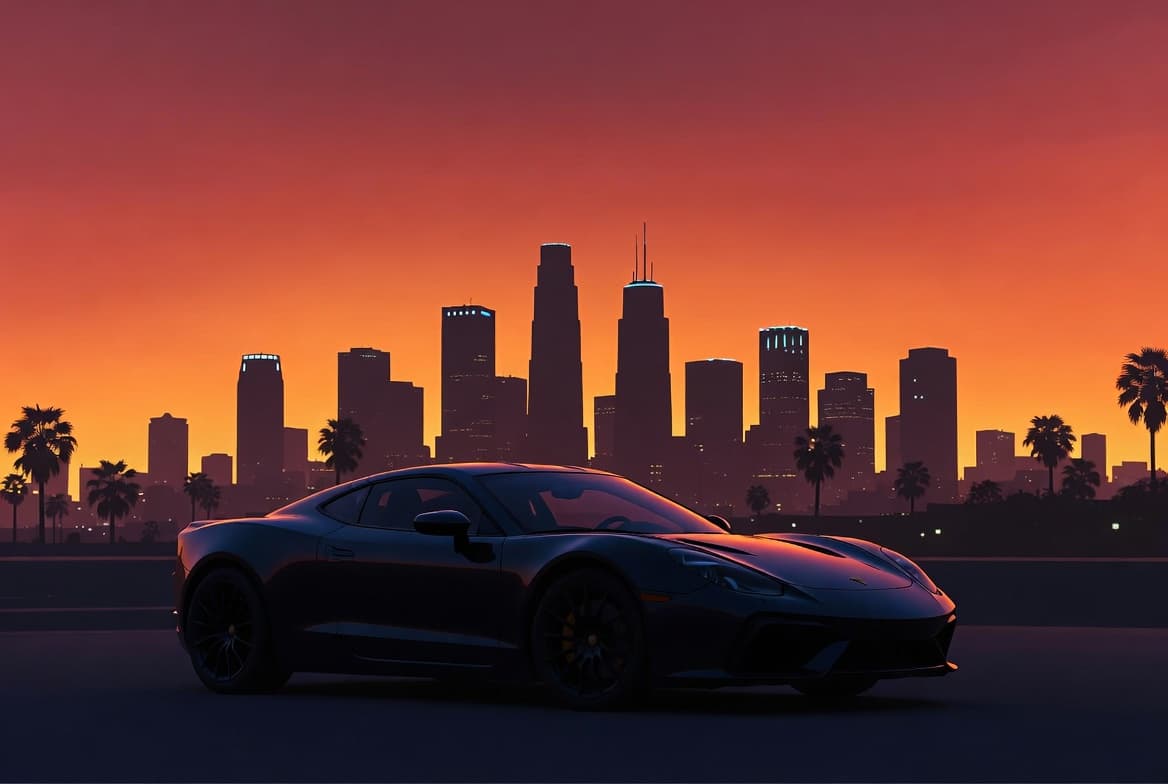
The GTA V map, thirteen years later, remains one of the most accomplished open worlds ever built. Los Santos is dense, detailed, and reactive in ways that most games released since haven't matched. Driving through it still feels good. The underlying sandbox systems — the physics, the combat, the emergent chaos of other players doing unpredictable things — hold up in a way that is genuinely rare for a game of this age.
The social dimension matters enormously. GTA Online at its best is not about missions or money — it's about what happens when you and three friends own a city and have unlimited tools to cause problems in it. That experience doesn't age the way a single-player campaign ages. The chaos is always fresh because the other players are always different.
Rockstar has also been sophisticated about community management in ways that aren't always visible. The introduction of passive mode, the CEO and VIP structures, the instanced content that separates high-level players from newer ones — these are systems designed to keep the experience viable for new players without alienating veterans. The fact that new players are still joining in 2026 is evidence that those systems work.
The Update Engine
The most underappreciated aspect of GTA Online's longevity is the consistency of Rockstar's update cadence. Every few months, without fail, a new content drop arrives. It is always free. It always adds something substantial — not just cosmetics, but new gameplay systems, new properties, new mission types.
This cadence has two effects. First, it gives lapsed players a reason to return. Second, it signals to active players that the game is alive and being invested in. The implicit promise is: if you stay, there will always be something new. Rockstar has kept that promise for thirteen years.
The economics of this model are worth examining. The updates cost money to develop but are given away free. The revenue comes from Shark Cards sold to players who want to access the new content without grinding for it. Rockstar is essentially running a content studio whose output exists to sell a currency. It is an unusual business model that has proven extraordinarily durable.
What Competitors Missed
In the years following GTA Online's success, numerous publishers attempted to replicate it. The results were instructive.
Red Dead Online launched in 2018 with a similar structure and never achieved comparable traction. Rockstar's own follow-up to its own model failed — in part because the Western setting attracted a different audience, in part because the content updates were slower and less substantial, and in part because Red Dead's world, beautiful as it is, offers fewer affordances for the kind of emergent chaos that makes GTA Online compelling.
Other publishers tried even more directly. The Crew, Need for Speed's online modes, various open-world multiplayer experiments — none of them found the combination of map quality, social design, and update consistency that made GTA Online work. The lesson the industry drew was that GTA Online's success was partly replicable but fundamentally depended on the specific context of GTA's world and player base.
The GTA 6 Question
Everything about GTA Online's future depends on a single variable: GTA 6.
When GTA 6 launches in November 2026, it will almost certainly include a new version of GTA Online set in its Vice City map. The question Rockstar and Take-Two have not answered publicly is what happens to GTA Online — the current one, set in Los Santos — when that happens.
The player base will almost certainly migrate. The new map, the new engine, the new possibilities will be too compelling for most active players to ignore. GTA Online as it currently exists will likely follow the trajectory of GTA IV's online mode after GTA V launched — playable but largely abandoned.
But that migration is not a failure. It is a transition. The model that made GTA Online $8 billion will simply move to a new vessel. Take-Two's investors understand this. The Shark Card economy doesn't end when GTA Online ends — it restarts, in a new city, with a new audience, and thirteen years of refined knowledge about exactly how to run it.
For a game that launched as an afterthought, that's a remarkable place to end up.