Why Cyberpunk 2077 Became Gaming's Greatest Second Chance Story
Cyberpunk 2077 launched as one of the biggest disasters in gaming history. Four years later, it's considered one of the best games ever made. Nothing quite like this has happened before.
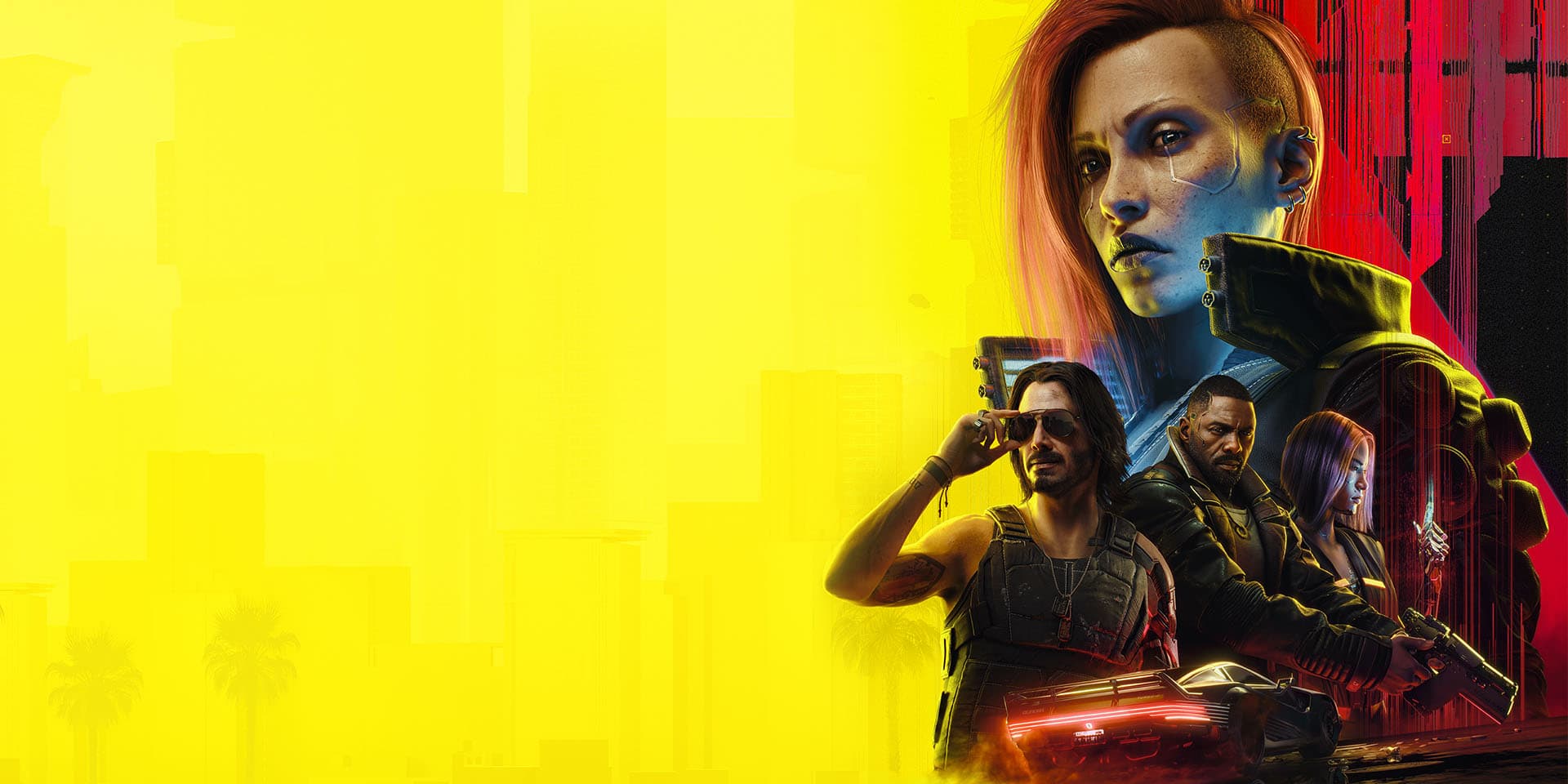
On December 10, 2020, CD Projekt Red released Cyberpunk 2077 after eight years of development, a marketing campaign that generated unprecedented hype, and a series of delays that the studio assured players were necessary to deliver something special.
The PlayStation 4 version ran at 20 frames per second. NPCs fell through the floor. Cars spawned from nowhere. Quests broke permanently. Sony removed the game from the PlayStation Store entirely — an event with almost no precedent in the history of digital gaming. Class action lawsuits followed. CD Projekt Red's stock dropped 30% in two days. Refunds were issued at scale.
It was, by any measure, one of the most catastrophic launches in gaming history.
In 2024, the same game received a 9/10 re-review from Eurogamer. It sold an additional 5 million copies following the release of its Phantom Liberty expansion. The Netflix adaptation Edgerunners drove a player return so large that CD Projekt Red's servers struggled to handle it. A sequel was announced to widespread excitement rather than skepticism.
No game in history has traveled that distance. Understanding how it happened explains something important about both the games industry and the people who play games.
What Actually Went Wrong
The Cyberpunk 2077 disaster was not a single failure. It was the visible result of several compounding problems that had been building for years inside CD Projekt Red.
The most fundamental was scope. The game's ambition expanded continuously throughout development — a living city, branching storylines, deep RPG systems, first-person perspective, multiple life paths — without a corresponding expansion of the timeline or team size needed to deliver it. Former employees described a studio culture where saying no to features was difficult, where the creative vision was allowed to grow without being constrained by production reality.
The second problem was platform. Cyberpunk 2077 was designed and optimized for PC and the then-new PlayStation 5 and Xbox Series X. The decision to also release on PlayStation 4 and Xbox One — made under pressure from investors and the practical reality that most players still owned last-generation hardware — required a port that the studio did not have adequate time to complete. The base console version was not ready. Everyone who worked on it knew it was not ready. It shipped anyway.
The third problem was the marketing campaign. For three years, CD Projekt Red presented Cyberpunk 2077 to the public as a finished, polished, revolutionary experience. Gameplay demos were carefully controlled. Review copies were provided only for PC, with console performance hidden until launch day. The gap between what was promised and what was delivered was not just a technical failure — it was a trust failure, which is harder to recover from.
Why CD Projekt Red Chose to Fight
After the launch, CD Projekt Red had a choice that not every studio in its position makes.
They could have moved on. The game had already sold 13 million copies in its first ten days despite the disaster — enough to be commercially significant even if the reputation damage was permanent. A studio focused purely on short-term financial outcomes might have concluded that the cost of rebuilding Cyberpunk 2077 outweighed the benefit, and shifted resources to whatever came next.
Instead, the studio published a public roadmap committing to specific fixes on specific timelines and held itself accountable to it. The next eighteen months were spent not on new content but on repairing what existed — performance patches, bug fixes, AI overhauls, police system rebuilds, quest repairs. Updates arrived regularly. Progress was documented publicly. The studio communicated with its player base in ways that were unusually transparent for a company in crisis.
This decision was not purely altruistic. CD Projekt Red's identity — built over decades on The Witcher series and a reputation for player-friendly practices — was its primary asset. Abandoning Cyberpunk 2077 would have meant abandoning the credibility that made CD Projekt Red different from other publishers. The repair project was as much about protecting the studio's future as about delivering on promises made to players.
The Edgerunners Moment
The single most important event in Cyberpunk 2077's rehabilitation was not a patch. It was a ten-episode anime series.
Cyberpunk: Edgerunners, produced by Studio Trigger and released on Netflix in September 2022, told an original story set in Night City with original characters. It had no obligation to rehabilitate the game's reputation — it was simply a piece of companion media commissioned before the launch disaster.
What it did, accidentally and completely, was reintroduce Cyberpunk 2077's world to an audience that had either abandoned the game after launch or never tried it. The anime was excellent — genuinely, critically excellent, winning awards and generating the kind of passionate online response that cannot be manufactured. Players who watched it wanted to spend more time in Night City. They returned to the game.
By September 2022, Cyberpunk 2077 had also received patch 1.6 — the most substantial technical overhaul since launch, addressing the majority of the most significant remaining issues. The game that returning players encountered was meaningfully different from what had launched twenty months earlier. The foundation had always been remarkable — the world, the writing, the atmosphere, the central story — and now that foundation was no longer buried under catastrophic technical failure.
Concurrent player counts on Steam jumped from under 10,000 to over 100,000 overnight. The turnaround had begun in earnest.
Phantom Liberty and the Final Argument
In September 2023, CD Projekt Red released Phantom Liberty — a full expansion set in a new district of Night City, featuring Idris Elba and an entirely new espionage storyline. It launched alongside patch 2.0, which didn't just add content but rebuilt the game's core systems: the police AI, the skill tree, the cyberware progression, the vehicle combat.
Phantom Liberty was the argument CD Projekt Red had been building toward for three years. It was excellent — not in a redemptive, grading-on-a-curve way, but in a straightforward, this-is-one-of-the-best-expansions-ever-made way. Review scores averaged in the low 90s. Players who had refunded the base game in 2020 bought Phantom Liberty and reported that the combined experience was among the best they'd had in years.
The expansion sold 5 million copies in its first month. It was nominated for multiple Game of the Year categories at The Game Awards. CD Projekt Red had not just repaired Cyberpunk 2077 — they had elevated it.
What the Industry Took From This
Cyberpunk 2077's rehabilitation has been cited repeatedly by publishers and developers as a model for handling catastrophic launches. The argument is seductive: release the game, fix it post-launch, and the damage is temporary.
This interpretation misreads what actually happened. CD Projekt Red's recovery required an unusual combination of factors that most studios cannot replicate: a world genuinely worth returning to, a studio with the resources and will to spend years on repair rather than moving on, a piece of companion media that landed perfectly at exactly the right moment, and a player base that wanted the game to be good badly enough to give it multiple chances.
Not every game has a Night City underneath its bugs. Not every studio has the financial runway to spend two years fixing rather than shipping. Not every IP generates an Edgerunners. The Cyberpunk 2077 recovery is not a template — it is an exception that required exceptional circumstances to produce.
The more honest lesson is the one CD Projekt Red itself has taken: the studio has stated publicly that Cyberpunk 2077's launch taught it that no amount of ambition justifies shipping an unfinished product. The sequel, currently in development, is being built with a development culture explicitly redesigned in response to what went wrong.
Why Players Came Back
Underneath the business analysis and the production history, the Cyberpunk 2077 story is fundamentally about why people play games.
Players wanted this game to be good. The world CD Projekt Red built — the rain-soaked neon canyons of Night City, the mordant wit of its writing, the melancholy at the center of V's story, the texture of a future that felt genuinely imagined rather than assembled from genre clichés — was compelling enough that players returned to it despite being burned. They came back because the thing they had hoped to find in 2020 was still there, waiting underneath the wreckage of the launch.
That is not something that can be patched in. The foundation of Cyberpunk 2077 was always extraordinary. What the studio did over four years was remove everything that was preventing players from experiencing it.
The second chance wasn't given to CD Projekt Red by the industry. It was given to them by players who believed, correctly, that the game they had been promised was somewhere inside the one they had received.